Our method

The science behind every investigation

Five fields of research that rarely work together, focused on a single case: your name.

Your story is waiting in the archives

A database alone can't bring it to light. It takes different kinds of expertise and the patience to check sources one by one. Name research reads the roots of a name. Surname geography maps where it traveled. Old handwriting tells us what the records really say. Heraldry checks titles and coats of arms. Migration history follows families across the ocean. Together, they turn a surname into a documented case.

Name origins
I. Name origins

Where does your name really come from?

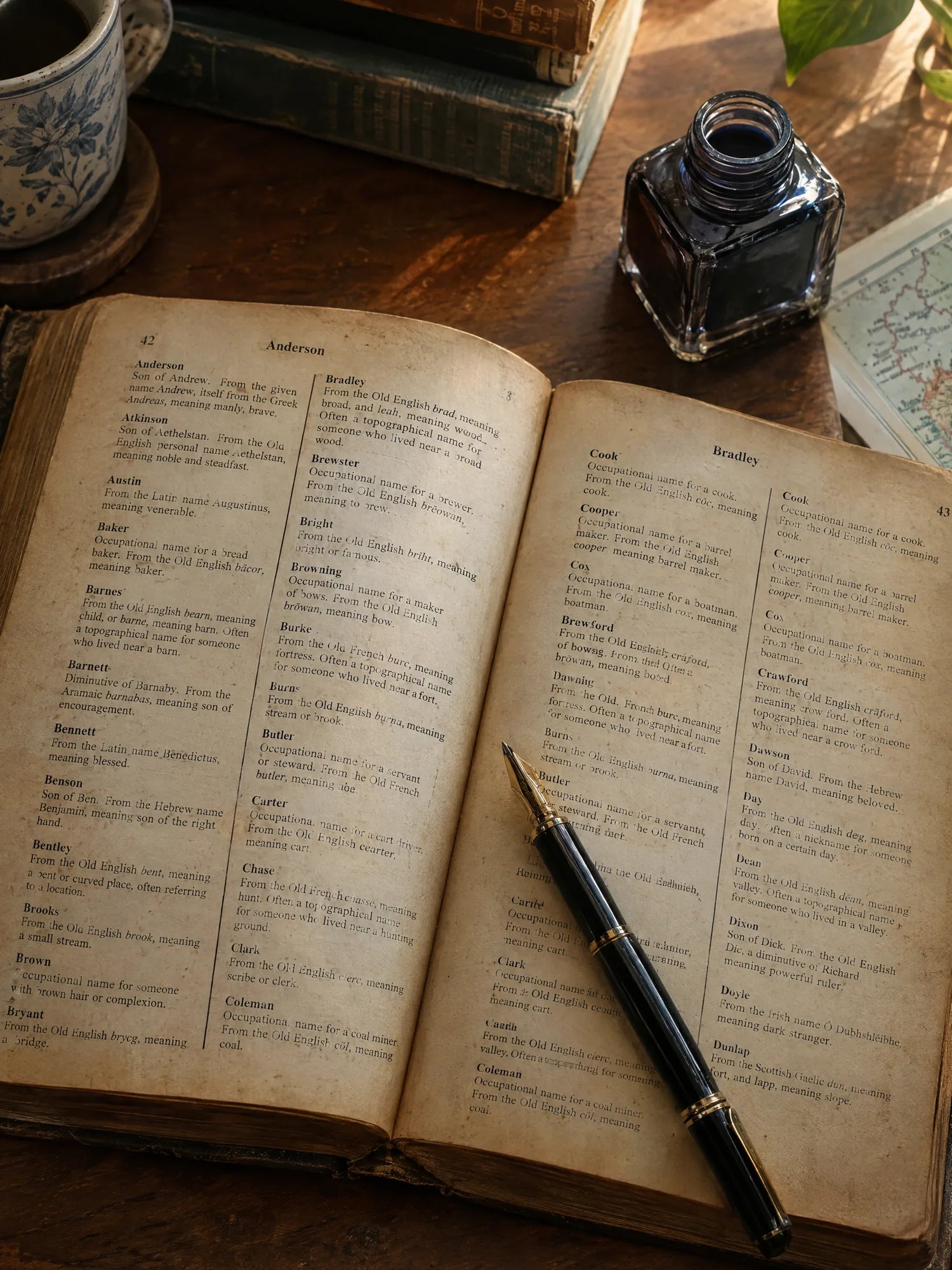
This is the study of names and their roots (onomastics). Every surname started somewhere: an ancestor, a place, a job, a nickname or a people. Finding the right starting point is the first step of every investigation, because getting it wrong means telling another family's story. The work is to trace the name back, one form at a time, from the way it's spelled today to the way someone said it centuries ago, before it was ever written down.

  • From an ancestor's first name (like Johnson, "son of John")
  • From a place where the family lived or came from
  • From a job or a personal trait
  • From a people or a land

In your piece

Where your name comes from and what it means, with the attractive theories kept apart from the documented facts.

Surname geography
II. Surname geography

Where are its roots, and how far has it traveled?

A complicated name for a simple idea: where a name is found points to where it began. We study how a surname is spread across a country, region by region and often town by town, and read that picture backward, from where families are found in recent records to the oldest clusters. That's how the birthplace of a name comes to light, along with the places it reached only recently.

  • The place where the name first took root
  • The places it reached later
  • The first clues about how the family moved over time

In your piece

Where your name is most common, its historic strongholds and, for families who emigrated, where the name settled.

Old records and handwriting
III. Old records and handwriting

What do the documents say, and are they genuine?

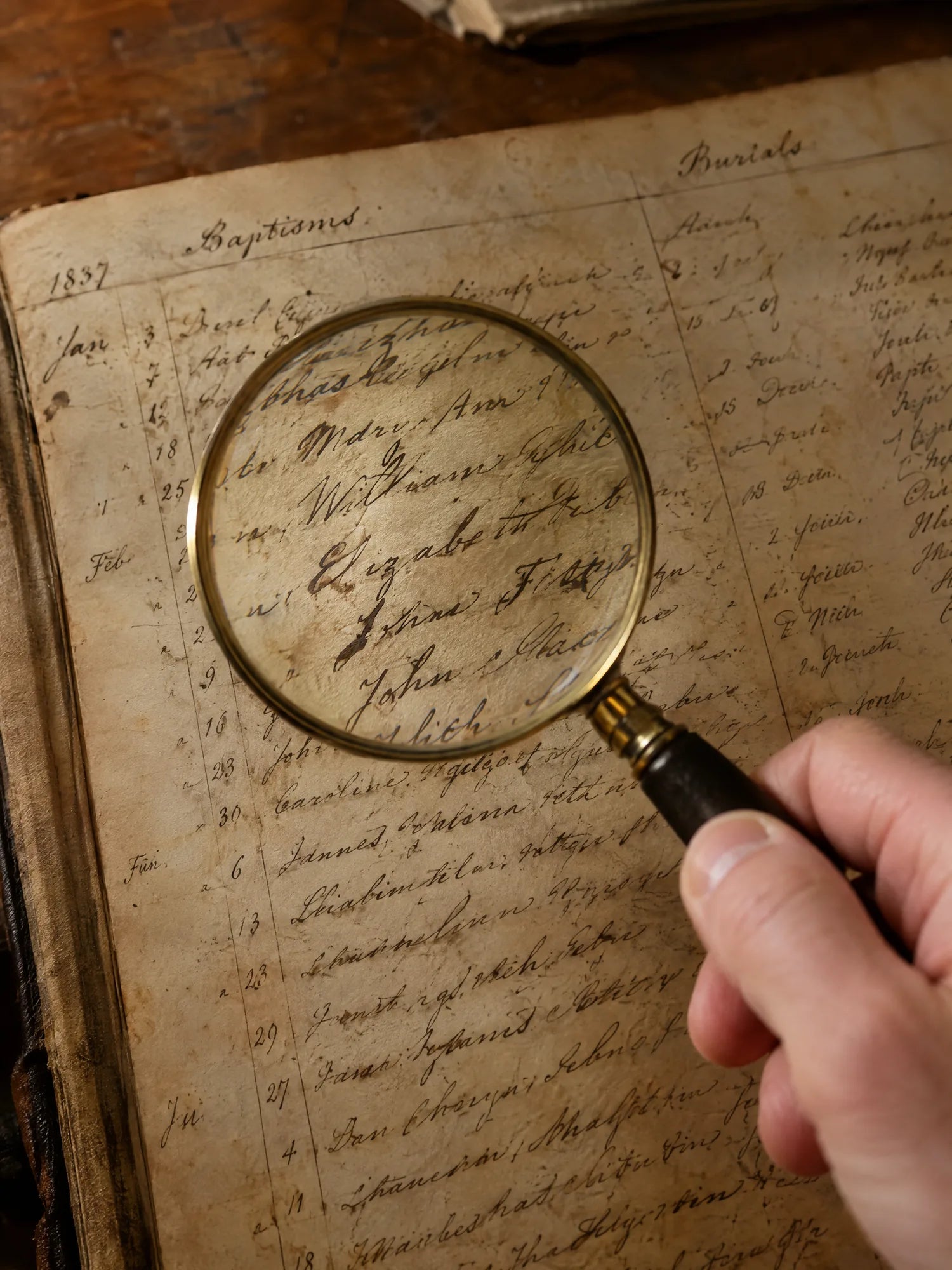
Two rare skills: reading handwriting from centuries ago, and recognizing whether a document is what it claims to be (paleography and diplomatics). This is where a theory becomes proof. It means reading handwritten registers, decoding old abbreviations and legal formulas, and telling a late copy from an original record. No database replaces this step: many of the oldest records have never been indexed.

  • National, state and local archives
  • Church and civil registers of baptisms, marriages and births
  • Censuses and old land records

In your piece

The documented records, and a guide to the archives where your research can continue.

Heraldry
IV. Heraldry

Does your surname appear in the records of nobility?

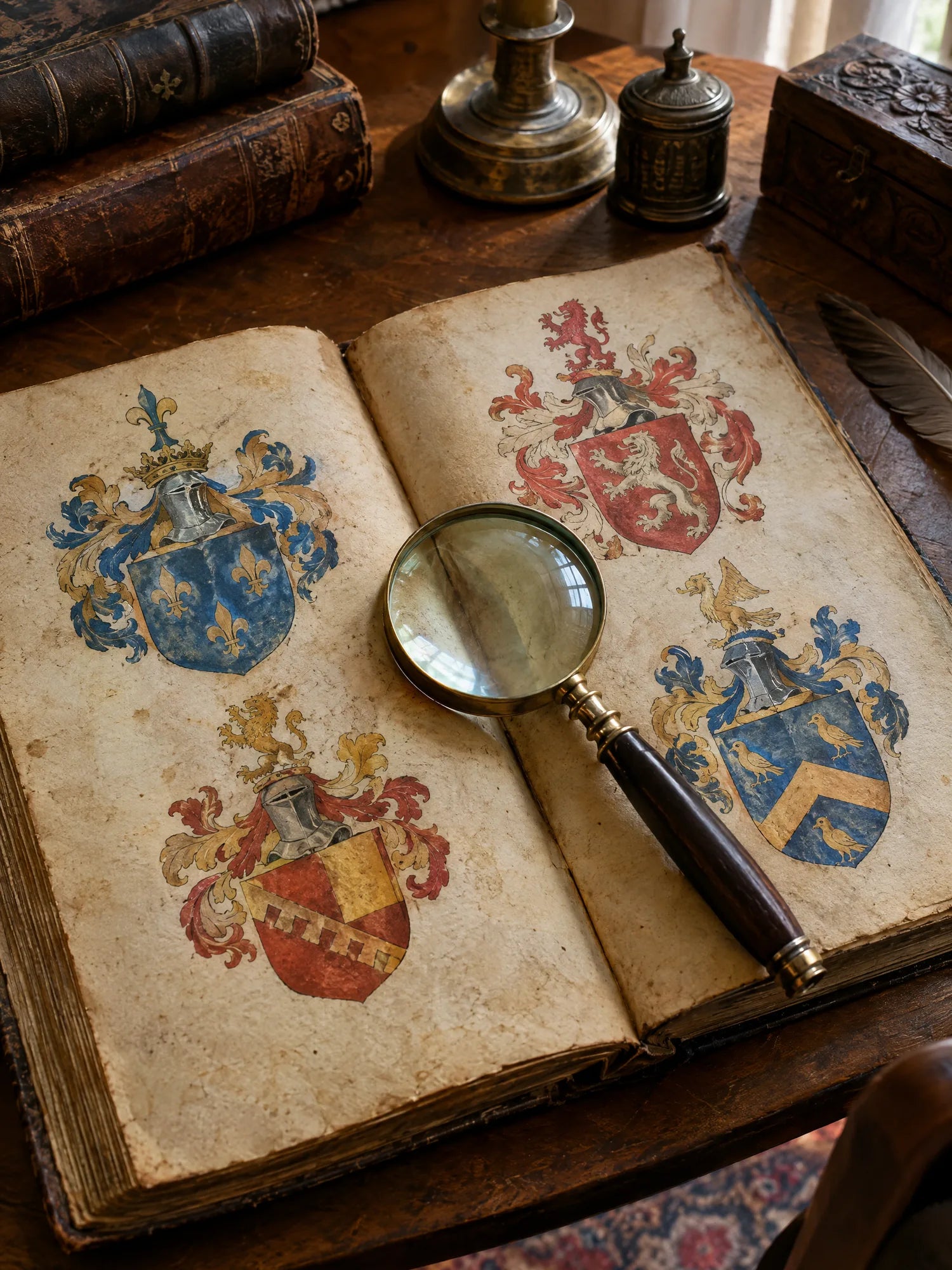
Heraldry is the study of coats of arms and family titles. We check whether a surname appears in heraldic sources and exactly what they say, because a genuine coat of arms always belongs to one specific family line, with its own name, place and century. Linking it to your family takes documents that prove the connection. This is the area most crowded with legends, so we handle it with the most care.

  • We tell you if and where your surname appears in heraldic sources
  • We tell you, just as clearly, when it doesn't appear anywhere

In your piece

The result of the heraldry check, positive or negative. Never a coat of arms assigned without proof.

Migration history
V. Migration history

Who left, and where did they arrive?

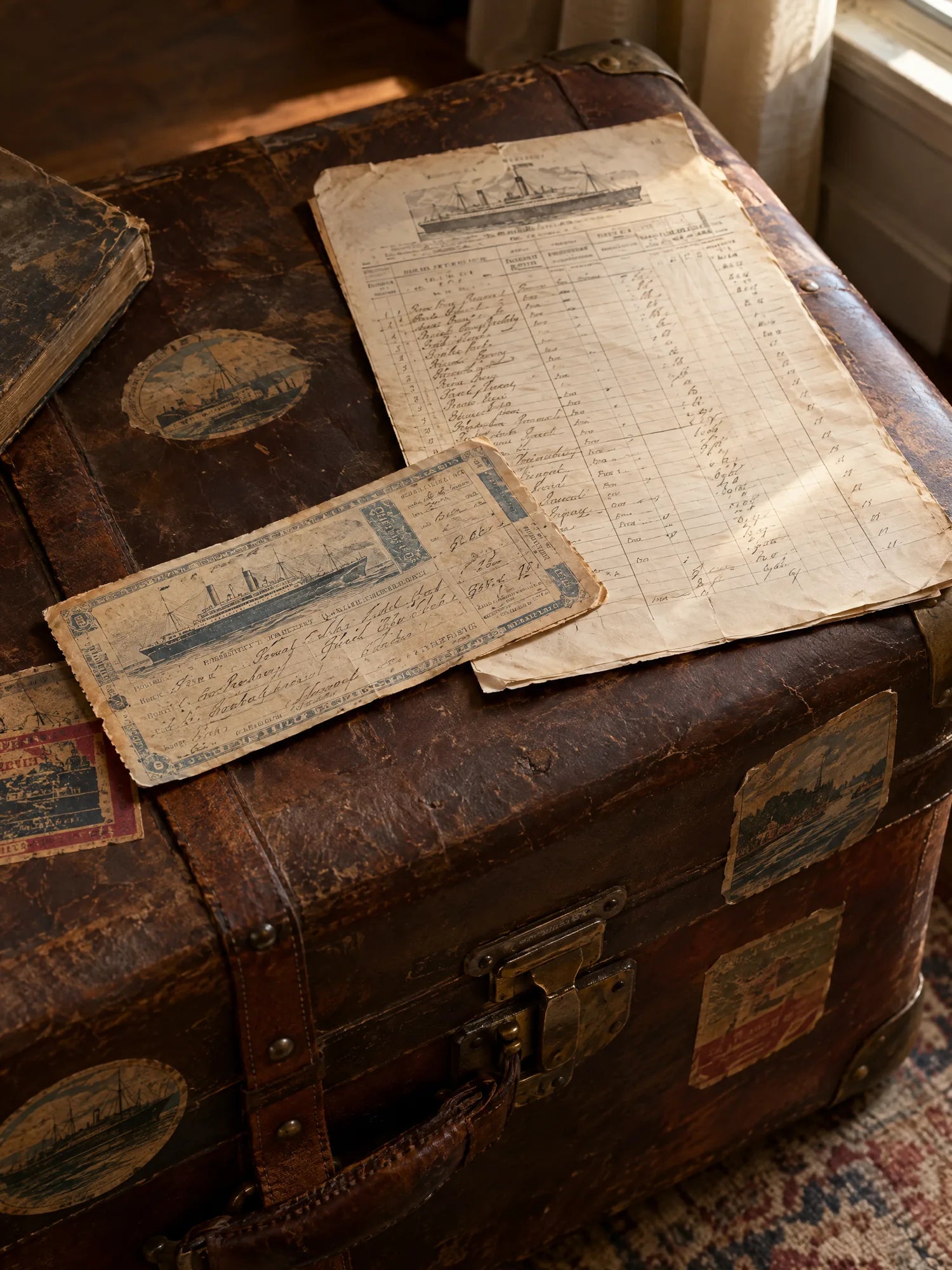
Families move, and their names travel with them: from farms to cities, from one region to another, and for millions of families across the ocean. We trace that path by combining where the name is found with the passenger lists of ships, records where each line holds a name, an age, a job and a date. Finding that line means finding the day everything changed for a family.

  • How the name spread, step by step
  • For families who emigrated, the routes traced from ships' passenger lists
  • Where the name settled in America

In your piece

The routes of those who left and the places around the world where your name landed.

Our sources

We work only with real records

No investigation is closed without a document to support it.

National censuses
Who lived where, from the US Census to the censuses of the country of origin
Passenger lists
Departure and arrival records from the ports of Europe, Asia and the Americas
Naturalization records
Hometowns, ships and arrival dates of new citizens
Church and civil registers
Baptisms, marriages and burials, often the only way back before 1800
Land and tax records
Snapshots of families, land and trades before modern records
Heraldic records
Collections of coats of arms and titles, checked to verify, never to assign
Research and reference works
Name studies, local history, encyclopedias and biographies

Our promise

We never mix history with legend

Every investigation keeps three levels apart. That line is what makes it reliable.

I.

Documented facts

What a record proves: a date, a place, a name in a register. We show you where it comes from, so anyone can check it.

II.

Well-founded theories

What language, geography and the evidence make likely, but no record confirms. We label them clearly and explain what they rest on.

III.

Family legends

What families have told each other for generations. We share them with respect, and just as clearly: they are stories, not proof.

Whenever something is a theory, we say so plainly, so you'll always know where you stand.

The result

The method becomes a keepsake

All this work comes to you as a piece you can frame, read and pass down.